How to Choose the Right Rolling Bearing for Your Needs?
Choosing the right rolling bearing is crucial for various applications. These components are often overlooked, yet they play a vital role in machinery efficiency. Understanding your specific needs can simplify the selection process.
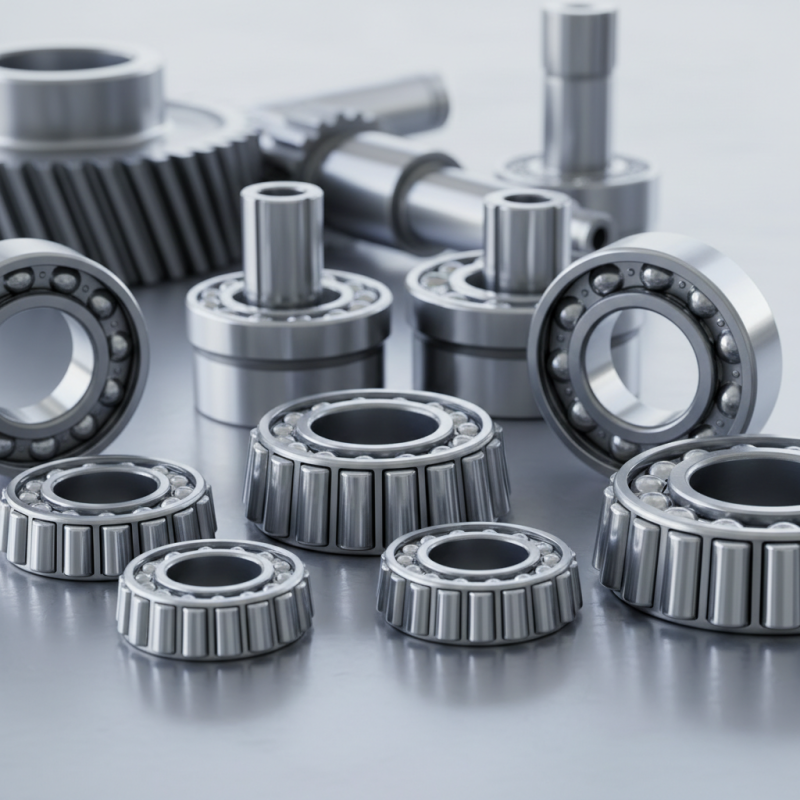
Different types of rolling bearings offer unique benefits. For example, ball bearings are ideal for support and minimize friction. On the other hand, roller bearings can handle heavier loads. Consider what you need your bearing to achieve. Are you prioritizing speed, load capacity, or durability?
You might also reflect on common mistakes made in choosing rolling bearings. Many overlook maintenance requirements, which can lead to premature failure. So, take time to analyze factors like environment and operational demands. This awareness will help you select a bearing that truly meets your needs.
Understanding the Basics of Rolling Bearings
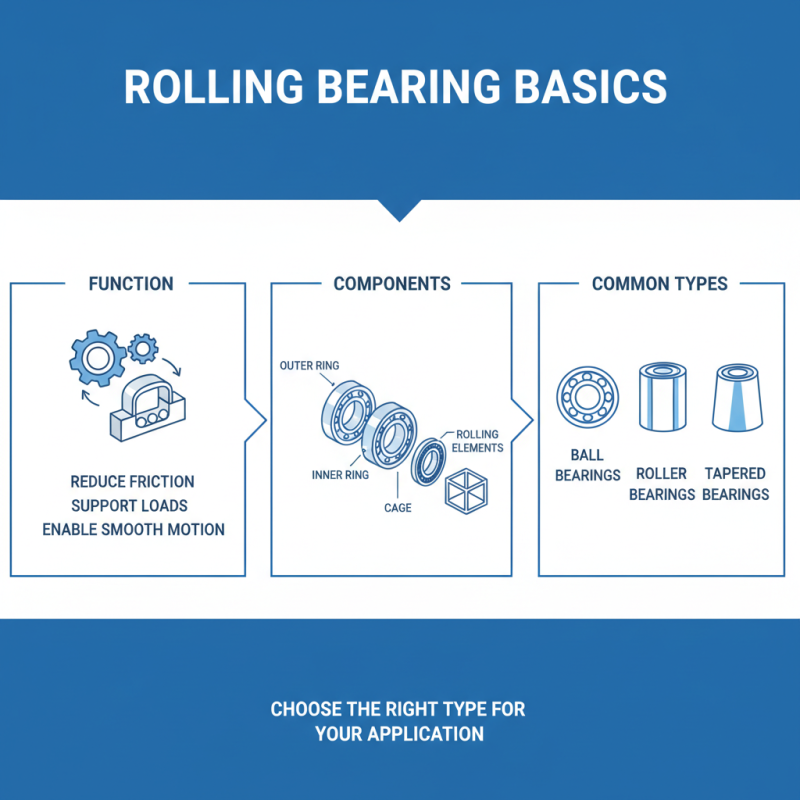
Rolling bearings are essential components in many machines. They reduce friction, support loads, and allow smooth motion. Understanding their basics can help in choosing the right type for your application.
There are various types of rolling bearings: ball, roller, and thrust bearings. Each type serves a different purpose. For instance, ball bearings are great for light loads and high speeds. Roller bearings handle heavier loads, but their speed limits are lower. Knowing the load and speed requirements is critical.
Different environments impact bearing performance. Temperature, moisture, and contamination can affect longevity. Certain bearings may perform poorly under specific conditions. It's worth reflecting on the possible limitations of each choice. Regular maintenance is crucial, yet many overlook it. This can lead to premature failure. Finding the balance between cost and reliability requires careful thought.
Identifying Your Application Requirements
Choosing the right rolling bearing requires a clear understanding of your application requirements. Different industries have specific needs. For instance, manufacturing environments often require bearings that can handle high loads and severe conditions. According to a report by the Rolling Bearing Industry Association, about 32% of bearing failures can be traced back to incorrect selection.
Speed and load capacity are critical factors to consider. If your application involves high speeds, like in electric motors, hybrid bearings may be more suitable. In contrast, heavy machinery often benefits from roller bearings due to their load-distributing properties. The right choice can enhance efficiency and extend service life, yet many overlook these criteria.
It's worth noting that maintenance needs also play a significant role. Some bearings require more frequent lubrication or monitoring. Data shows that proactive maintenance can reduce downtime by 30%. While it is easy to focus solely on initial costs, long-term implications of bearing choices can be substantial. Thus, reflecting on both short-term needs and future demands is essential when making a selection.
How to Choose the Right Rolling Bearing for Your Needs? - Identifying Your Application Requirements
| Bearing Type |
Load Capacity (radial, N) |
Speed Rating (rpm) |
Operating Temperature (°C) |
Material |
| Deep Groove Ball Bearing |
6000 |
8000 |
-30 to 120 |
Chrome Steel |
| Self-Aligning Ball Bearing |
5400 |
4200 |
-20 to 100 |
Stainless Steel |
| Tapered Roller Bearing |
8200 |
4000 |
-40 to 150 |
Chrome Steel |
| Angular Contact Ball Bearing |
5000 |
9000 |
-30 to 120 |
Nickel Steel |
| Spherical Roller Bearing |
9500 |
3000 |
-30 to 120 |
Stainless Steel |
Evaluating Load and Speed Specifications
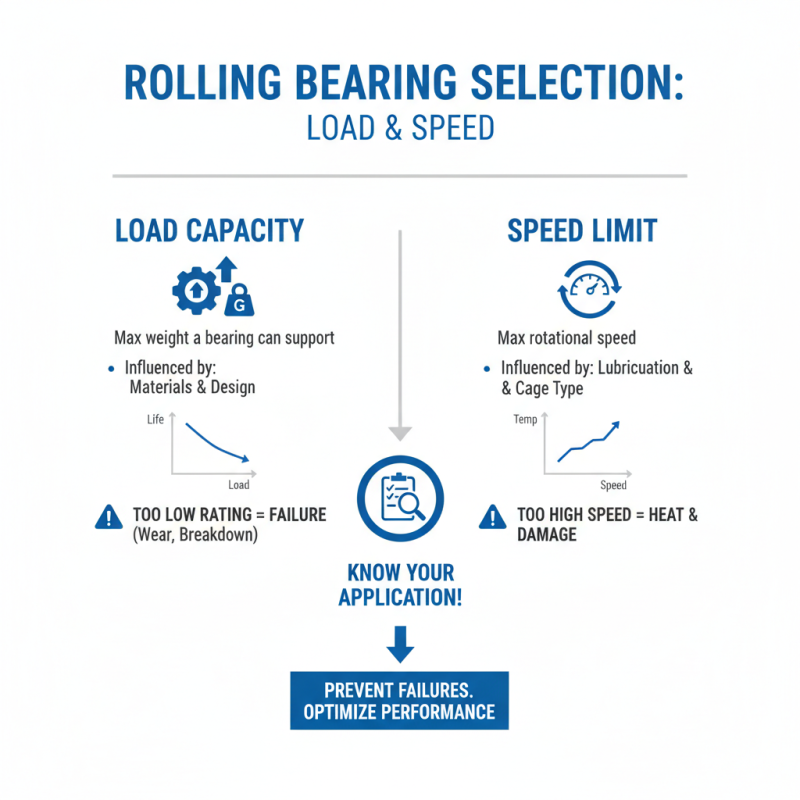
When choosing a rolling bearing, understanding load and speed specifications is crucial. The load capacity of a bearing determines how much weight it can support. Each bearing type has its limits, influenced by materials and design. Knowing your application load helps prevent failures. If the bearing's load rating is too low, it can lead to early wear or even breakdown.
Speed specifications also play a vital role. Bearings have a maximum speed limit related to RPM. Exceeding this limit can cause overheating and shorten lifespan. It's important to evaluate the actual operating speed of your machinery. Often, applications might run at higher speeds than anticipated, which could be risky. Pay attention to these details, as they shape the reliability and efficiency of your equipment.
Do not overlook the importance of temperature limits as well. Some bearings perform better at certain temperatures. If your machine operates in extreme conditions, selecting the right bearing becomes even more critical. Thorough testing and evaluation can help match the bearing with its intended use. This reflective approach ensures better performance and longer service life.
Material Options for Rolling Bearings
When selecting rolling bearings, material choice is crucial. The right material affects performance, durability, and cost. Common options include steel, ceramics, and polymers. Each material has its own strengths and weaknesses.
Steel bearings are popular due to their strength and load capacity. They are often used in high-load applications. However, they may rust if not properly maintained. This can lead to premature failure. On the other hand, ceramic bearings are lightweight and resistant to wear. They can handle high temperatures but are more brittle. A single drop could ruin them.
Polymer bearings are another alternative. They are often self-lubricating and resistant to corrosion. This makes them suitable for harsh environments. However, they have lower load limits compared to metal options. Choosing the best material requires careful consideration of your specific needs. Sometimes, a hybrid approach can provide a balance of performance and cost, but this also complicates the selection.
Material Comparison for Rolling Bearings
Assessing Maintenance and Longevity Factors
When selecting rolling bearings, maintenance and longevity are crucial factors. Choosing a bearing that lasts can save time and costs. Consider the environment where the bearing will operate. High temperatures, moisture, or dust can impact performance. These elements may lead to premature failure.
Proper lubrication is essential for extending a bearing’s lifespan. However, it can be easy to overlook. Some may assume that using more grease will improve performance. This is not always the case. Over-lubrication can cause damage and wear. On the other hand, inadequate lubrication also leads to failures. Maintenance schedules should be realistic and adhered to, preventing oversight.
Keep in mind the load capacity of each design. Misjudgment here can affect longevity. A bearing under too much stress will wear out faster. Regular inspections could reveal signs of wear early on. It’s important to factor in the cost of downtime. Being proactive is better than facing sudden failures later. Some choices appear simple, but they require deep thought and analysis.