How to Choose the Right 25mm Pillow Block Bearing for Your Needs?
Choosing the right 25mm Pillow Block Bearing is crucial for optimal performance in various applications. As industries continue to evolve, precise bearing selection is more important than ever. According to a recent market analysis by Bearing Industry Experts, the demand for high-quality bearings has surged by 15% in the last year alone.
Dr. Emily Chen, a prominent figure in mechanical engineering, emphasizes the importance of selection. She states, "The right bearing choice directly impacts efficiency and longevity." Her insights reflect the growing complexity in machinery specifications. Amidst the myriad of options, many buyers overlook critical details that affect performance.
Engineered for support and reliability, 25mm Pillow Block Bearings fit into numerous configurations. With various materials and designs available, it’s essential to align your needs accurately. However, many users often get confused by dimensions and load ratings. This can lead to subpar choices. Understanding your specific requirements will bolster productivity and minimize costs in the long run.
Understanding the Basics of 25mm Pillow Block Bearings
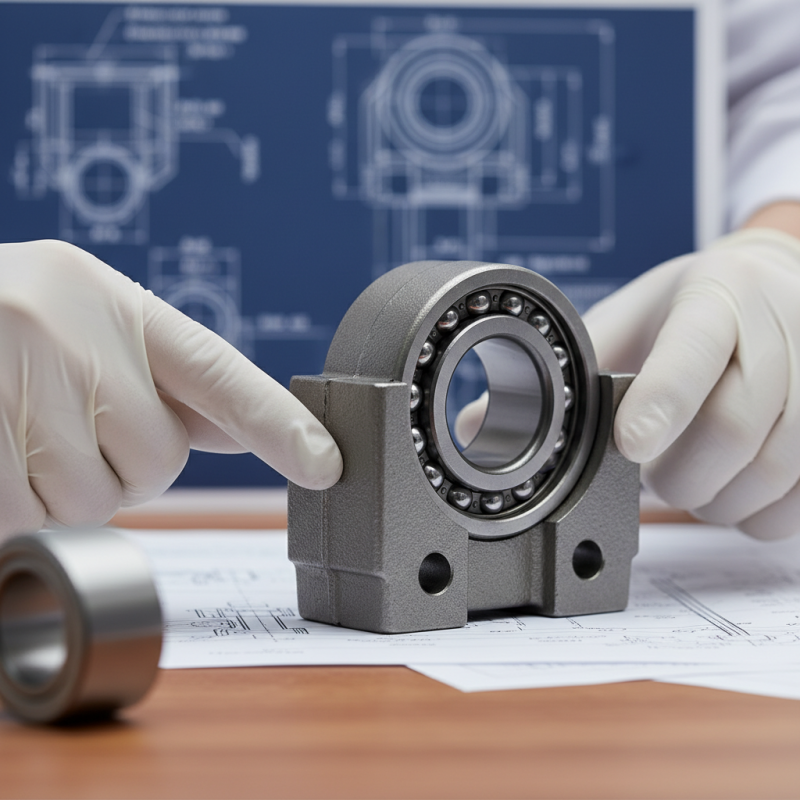
When selecting a 25mm pillow block bearing, understanding the basics is crucial. These bearings support shafts and enable smooth rotation. They come in various designs, materials, and load ratings, impacting their performance in specific applications. For example, data from a recent industry report suggests that over 60% of equipment failures are linked to bearing issues. Choosing the right bearing can significantly reduce downtime and maintenance costs.
Tips: Always check the load capacity. An undersized bearing can lead to premature failure. Look for reliable material grades like Chrome Steel or Stainless Steel for durability. Different coatings can also help against corrosion.
Pillow block bearings provide essential support in many sectors, including manufacturing and automotive. However, not all 25mm bearings are designed equally. Some may have higher noise levels or lower heat resistance. Ensuring you select a bearing that meets your specific operational needs is vital. Various factors such as lubrication type and environmental conditions can influence bearing selection and lifespan.
Understanding the Characteristics of 25mm Pillow Block Bearings
This chart illustrates the key characteristics of 25mm pillow block bearings that are essential when selecting the right bearing for your needs. The data reflects typical values for load capacity, speed rating, temperature range, and material strength.
Key Factors to Consider When Selecting a Pillow Block Bearing
When selecting a 25mm pillow block bearing, understanding key factors is essential. The load capacity of the bearing is crucial. Reports indicate that many industrial applications require bearings capable of handling significant loads. A bearing’s dynamics load rating can inform its effectiveness and lifespan.
Another factor is the material of the bearing. Common materials include cast iron and stainless steel. Each type has distinct advantages. Cast iron, for example, offers high rigidity, while stainless steel provides excellent corrosion resistance.
Tips: Always review the operating temperature range. The wrong temperature can reduce performance and lifespan.
The alignment of the bearing also plays a vital role in its effectiveness. Misalignment can lead to wear and increased maintenance costs. It’s important to ensure precise installation.
Tips: Consider vibration levels in your application. Excessive vibrations can indicate issues with alignment or balance.
Taking these factors into account leads to better bearing selection. The right choice supports efficiency and minimizes downtime in production operations.
Different Types of 25mm Pillow Block Bearings and Their Applications
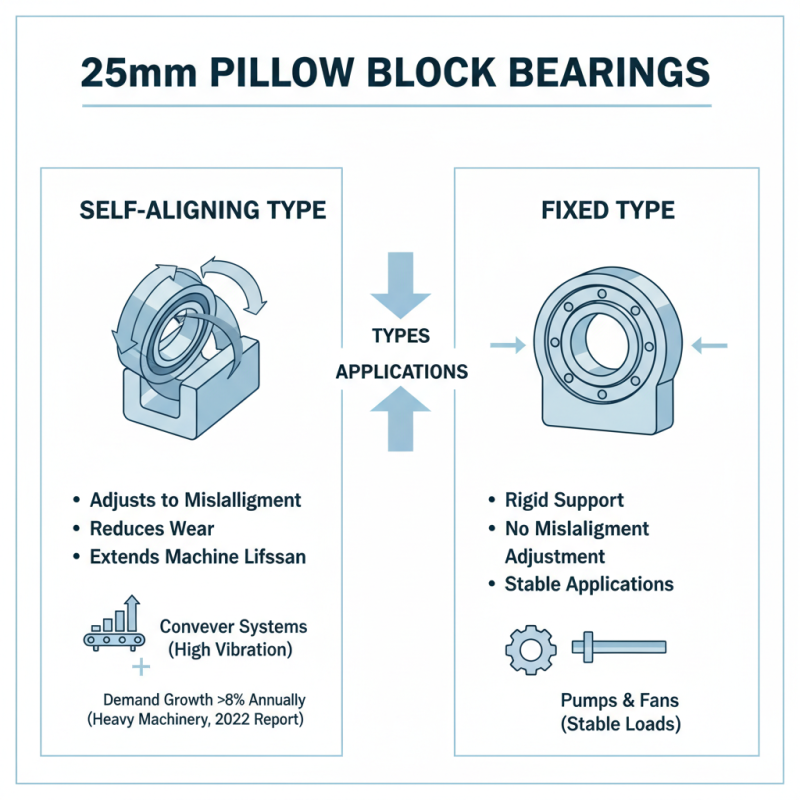
When selecting a 25mm pillow block bearing, understanding the types available is crucial. These bearings generally fall into two categories: self-aligning and fixed types. Self-aligning bearings can adjust to shaft misalignments. This feature is vital in applications where vibrations occur, such as in conveyor systems. The flexibility offered by self-aligning designs often extends the operational lifespan of machines by minimizing wear. According to a 2022 market analysis, these bearings saw a demand growth rate of over 8% annually in heavy machinery.
Fixed pillow block bearings are ideal for applications requiring rigidity. They are commonly used in woodworking and textile machinery. These bearings handle higher loads without shifting, providing stability. However, they are less forgiving of alignment issues. A recent report highlighted that improper alignment in fixed bearings can lead to a dramatic drop in performance efficiency, sometimes by as much as 30%.
Choosing the right type involves knowing your specific needs. The operational environment plays a significant role in this decision. Temperature, load, and speed must all be considered. In extreme conditions, the choice of bearing material also matters. Investing in the appropriate type can significantly affect operational efficiency and equipment longevity.
How to Properly Install a 25mm Pillow Block Bearing
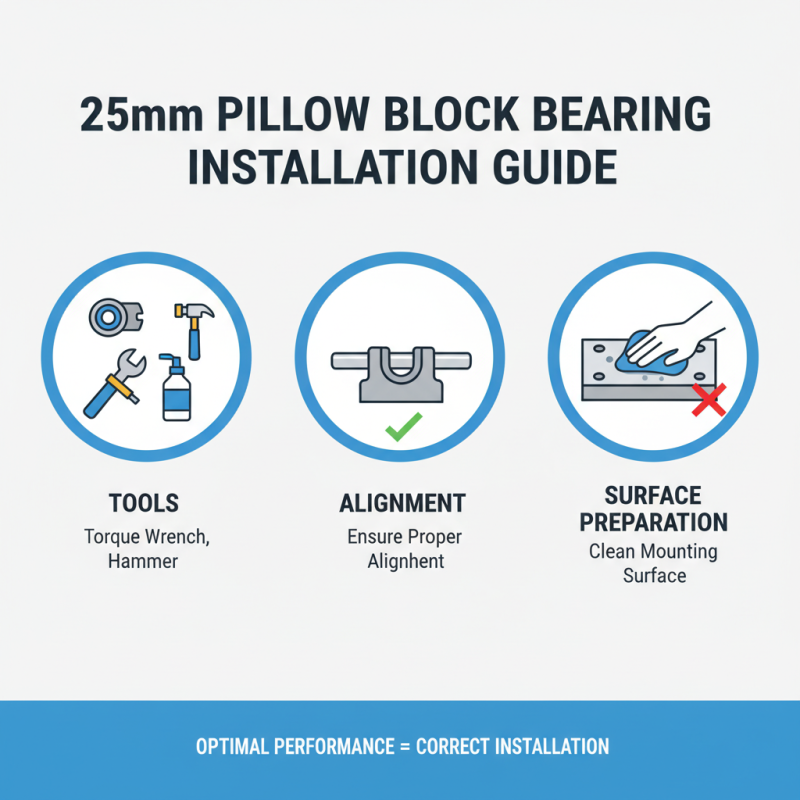
Installing a 25mm pillow block bearing correctly is crucial for optimal performance. First, ensure you have all the necessary tools. This includes a torque wrench, a hammer, and a suitable lubricant. Proper alignment is vital. If the bearing is misaligned, it can lead to premature wear. Double-check the mounting surface for any debris or imperfections.
When placing the bearing on its mounting surface, use even pressure. Avoid using excessive force, as this can damage the bearing. Once positioned, secure it firmly using bolts. Torque them to the manufacturer's specifications, as over-tightening can lead to distortion.
Tips: Always wear safety gear when working with bearings. It protects you from potential injuries. Maintain cleanliness in your workspace. Dust and grime can cause significant issues later on. Additionally, consider the environmental factors. Humidity and temperature may affect the bearing's performance over time. Regularly inspect the installation to catch any signs of wear early.
Maintenance Tips for Extending the Life of Pillow Block Bearings
Pillow block bearings are essential for smooth machinery operation. Regular maintenance is crucial to extend their lifespan. Proper care can prevent costly downtime.
One effective tip is to check the alignment of the bearings regularly. Misalignment can cause uneven wear. This might lead to premature failure. A simple visual inspection can often reveal alignment issues. Cleaning the bearings is another necessary step. Dust and debris can accumulate and affect performance. Use a soft cloth to wipe them regularly.
Lubrication plays a vital role in bearing maintenance. Ensure that you are using the right lubricant for your environment. Over-lubricating can be just as harmful as under-lubricating. It's essential to follow specific guidelines for the application amount. Monitor operating temperatures, too. High temperatures indicate potential problems. They require immediate attention to avoid damage. Adjusting your maintenance practices can lead to improved functionality and longevity of your pillow block bearings.