Welcome to our websites!

China Top Roller Bearing Manufacturers for Global Buyers?

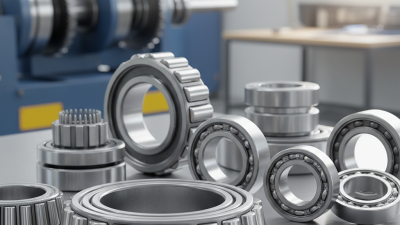
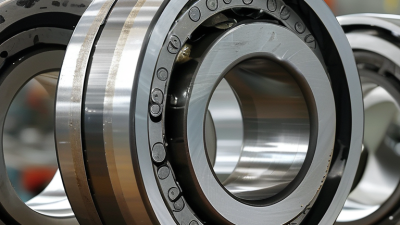
China has become a major sourcing base for industrial bearings, supported by extensive steel, machining, heat-treatment, and export networks. For global buyers, selecting China’s top Roller Bearing manufacturers requires more than comparing unit prices. It requires evidence of accuracy, fatigue resistance, production stability, and after-sales support.

Market data shows why this category deserves careful attention. Grand View Research estimated the global bearing market at more than USD 120 billion in 2023, with continued growth expected across automotive, wind power, mining, and industrial equipment. The China Bearing Industry Association has also reported sustained demand from manufacturing, transportation, and new-energy applications. However, published market values vary by definition and research method. Buyers should treat forecasts as direction, not proof.

Reliable evaluation begins with verifiable manufacturing details. ISO 9001 certification is useful, but it cannot replace process audits. Check steel certificates, grinding tolerances, hardness records, cage materials, lubrication options, and batch traceability. Ask whether the factory measures vibration, noise, radial clearance, and dimensional stability before shipment. In practice, a small sample can reveal more than a polished catalogue.

Strong manufacturers should also explain their testing equipment and failure-analysis process. This matters when bearings operate under shock loads, contamination, high speed, or continuous duty. Chinese suppliers differ greatly in engineering depth, even within the same region. That is an uncomfortable point. Low price may reflect efficiency, or hidden compromises. Global buyers should request samples, inspection reports, reference projects, and clear warranty terms before approving a long-term Roller Bearing supply partnership.
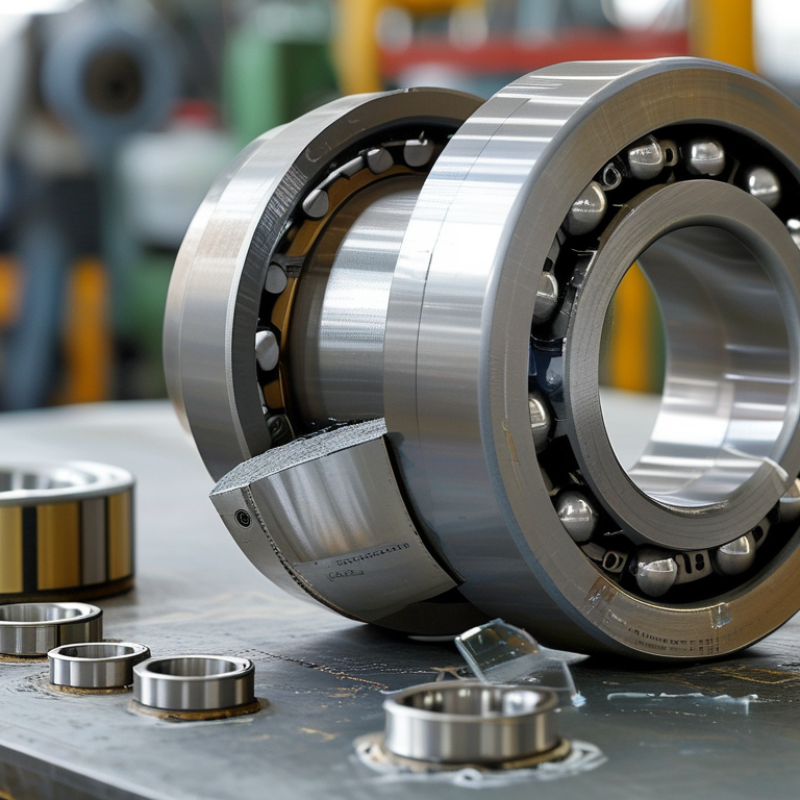
China Top Roller Bearing Manufacturers for Global Buyers?

China’s Roller Bearing Industry: HS 8482 Trade Data and Global Market Scope

For global buyers, China’s roller bearing sector is best understood through HS 8482 trade data. This code covers ball bearings, roller bearings, and bearing parts in customs reporting. National tariff lines may differ, so compare descriptions, quantities, and values carefully. A shipment value alone says little. It may represent premium assemblies, commodity rollers, or replacement components.

Customs databases show China as a substantial export source across industrial bearing categories. Demand follows machinery production, vehicle maintenance, wind equipment, conveyors, and agricultural applications. Buyers can study destination markets, monthly volumes, unit values, and repeat shipment patterns. Sharp unit-price changes deserve questions about size, material, packaging, or product mix. The data is useful, but imperfect. Some declarations combine different specifications under one tariff line. This weakness can distort comparisons between suppliers and countries.

Experienced sourcing teams connect HS trends with factory evidence. Ask for drawings, steel certificates, heat-treatment records, inspection reports, and lot traceability. For critical applications, verify radial clearance, hardness, noise, sealing, and load-life calculations against applicable standards. Independent sample testing can expose issues hidden by polished catalogs. A factory visit also reveals practical details: clean assembly areas, calibrated gauges, controlled storage, and consistent labeling. Not every low-price offer is inefficient. However, unexplained discounts deserve careful review before purchase. Trade statistics show market reach, not guaranteed reliability.

Top Chinese Manufacturers Ranked by ISO 281 Load Ratings and L10 Life

China Top Roller Bearing Manufacturers for Global Buyers?

A credible ranking should begin with ISO 281 data, not catalog claims. Dynamic load rating, marked as C, indicates a bearing’s calculated load capacity. L10 life estimates the basic rating life before ten percent of identical bearings may show fatigue. It is usually expressed in millions of revolutions. Higher C often means longer calculated life. Not always in service.

For global buyers, leading Chinese manufacturers can be ranked through verified C values, L10 calculations, and production consistency. Ask for test reports, material certificates, heat-treatment records, and dimensional inspection results. A bearing rated at 120 kN may appear stronger than one rated at 100 kN. The comparison is incomplete without matching bore size, roller geometry, clearance, and operating speed. ISO 281 is a calculation standard, not a complete quality certificate.

Factory experience also matters. I would inspect grinding controls, batch traceability, seal performance, and lubricant cleanliness. Request sample bearings from several production lots. Listen for roughness at low speed. Check vibration data under realistic radial loads. Small details matter.

Some rankings still rely too heavily on stated figures. That is a weakness. Real applications include misalignment, shock loading, contamination, and installation errors. A manufacturer with slightly lower published capacity may deliver better L10 performance through tighter process control. Buyers should compare measured results, not only impressive numbers. Ranking needs evidence.

Factory Quality Systems: ISO 9001, IATF 16949, and ISO 492 Tolerances

China’s leading roller bearing manufacturers increasingly serve global buyers through documented quality systems. A serious factory should operate under ISO 9001, with controlled procedures for purchasing, machining, inspection, and corrective action. During a factory visit, buyers may see batch cards beside grinding machines and inspection records linked to heat numbers. Traceability matters when a bearing later shows abnormal vibration.

For automotive and demanding industrial applications, IATF 16949 indicates stronger process discipline. It requires risk analysis, process audits, measurement control, and evidence that defects are prevented rather than simply sorted. Inspectors may check roller diameter, raceway geometry, hardness, and sealing performance. Small deviations can become noticeable noise, heat, or shortened service life. The paperwork must match the physical parts.

ISO 492 defines dimensional and running accuracy classes for rolling bearings. Buyers should confirm bore diameter, outside diameter, width, radial runout, and tolerance class before approving samples. A coordinate measuring machine helps, but calibration records deserve equal attention. Numbers alone are not enough. Some factories present excellent certificates yet explain inspection limits poorly. That is a warning sign. Experienced purchasers should compare reports, retain sample bearings, and request a clear response process for nonconforming batches. Perfection is unlikely. Honest reporting is more valuable than polished claims.

China Top Roller Bearing Manufacturers for Global Buyers? - Factory Quality Systems: ISO 9001, IATF 16949, and ISO 492 Tolerances

Quality Dimension Applicable Standard or Control What Global Buyers Should Verify Typical Factory Evidence Importance for Roller Bearings
Quality management system ISO 9001:2015 Confirm that the certificate is valid, covers the relevant bearing manufacturing activities, and is issued by an accredited certification body. Current certificate, audit reports, documented procedures, corrective-action records, and management-review records. Provides a structured system for process control, traceability, supplier management, inspection, and continual improvement.
Automotive quality requirements IATF 16949:2016 Check whether the certificate scope and production site match automotive supply requirements and whether customer-specific requirements are controlled. IATF certificate, process-audit results, control plans, PFMEA, MSA studies, PPAP documentation, and traceability records. Relevant for bearings used in automotive applications where defect prevention, variation reduction, and formal production approval are required.
Dimensional accuracy ISO 492 Verify the requested tolerance class, bearing type, nominal bore and outside diameter range, and the applicable ISO 492 limit values. Dimensional inspection reports, calibrated gauges, coordinate-measuring records, and lot-based acceptance data. Controls dimensional and running accuracy. The exact permissible deviations depend on bearing dimensions and tolerance class.
Tolerance class selection ISO 492 classes: P0, P6, P5, P4, P2 Ensure the purchase specification identifies the required class instead of using an undefined term such as “high precision.” Purchase specifications, inspection plans, product drawings, and certificates showing the ordered tolerance class. P0 is the normal class; P6, P5, P4, and P2 represent progressively tighter accuracy requirements. Higher precision generally requires stricter process control.
Material conformity Approved material specification and heat-lot control Request the steel grade, applicable material standard, heat number, supplier documentation, and incoming verification method. Mill certificates, chemical-composition reports, hardness records, heat-treatment charts, and material traceability logs. Bearing steel cleanliness, hardness, dimensional stability, and heat-treatment consistency influence fatigue life and wear resistance.
Heat treatment Validated heat-treatment process Review furnace capability, temperature uniformity, process parameters, batch identification, and hardness acceptance criteria. Furnace calibration records, temperature charts, hardness tests, metallographic results, and batch release records. Consistent heat treatment supports the required hardness, dimensional stability, load capacity, and rolling-contact fatigue performance.
Surface and form accuracy Drawing requirements and internal process specifications Ask for controls covering raceway roughness, waviness, roundness, profile, flange geometry, and burr prevention where applicable. Profilometer results, roundness charts, form-measurement records, visual-inspection standards, and first-article reports. Surface and form quality affect friction, noise, vibration, lubricant film behavior, and service life.
Internal clearance Specified radial internal clearance, such as C2, CN, C3, or C4 Confirm the clearance designation, measurement temperature, measurement method, and compatibility with shaft, housing, speed, and operating temperature. Clearance inspection records, calibrated instruments, sampling plans, and lot-release reports. Incorrect clearance can cause overheating, excessive vibration, insufficient load distribution, or premature bearing failure.
Noise and vibration Factory noise and vibration grading system Request the test method, operating speed, lubricant condition, acceptance grade, and calibration status of the test equipment. Noise-grade records, vibration spectra, equipment calibration certificates, and nonconformance trends. Important for electric motors, precision machinery, pumps, gearboxes, and other applications sensitive to acoustic or vibration performance.
Cleanliness and preservation Controlled cleaning, rust prevention, packaging, and storage Verify cleaning controls, preservative compatibility, packaging integrity, storage humidity limits, and shelf-life instructions. Cleanliness inspection results, packaging specifications, storage logs, and corrosion-prevention records. Foreign particles and corrosion can increase noise, damage raceways, reduce lubricant performance, and shorten operating life.
Lot traceability Documented identification and traceability process Confirm that each shipment can be traced to production date, material heat, machine, inspection results, and packaging unit. Lot codes, production travelers, barcode records, inspection reports, and shipment-retention samples. Enables focused containment, root-cause analysis, recall control, and verification of consistent production quality.
Measurement system capability Calibration and measurement-system analysis Check calibration intervals, traceability to recognized references, gauge repeatability, reproducibility, and measurement uncertainty where relevant. Calibration certificates, gauge records, MSA studies, control charts, and equipment-maintenance logs. Reliable measurements are essential for verifying ISO 492 tolerances and preventing false acceptance or rejection.
Pre-shipment inspection Approved inspection and sampling plan Agree on inspection level, critical characteristics, sampling frequency, acceptance criteria, and documentation supplied with each lot. Certificate of conformity, dimensional report, material records, packing list, and release approval. Provides documented confirmation that the delivered batch meets the agreed drawing, tolerance, material, and packaging requirements.

Note: ISO 9001 and IATF 16949 certify management-system conformity, while ISO 492 specifies rolling-bearing dimensional and running-accuracy tolerances. Exact tolerance limits must be selected from the applicable ISO 492 tables for the bearing type and nominal dimensions.

Compare Bearing Types by Dynamic Load, Speed, and Operating Temperature Data

China Top Roller Bearing Manufacturers for Global Buyers?

Dynamic load, speed, and temperature often decide whether a bearing survives real production. A deep-groove ball bearing usually offers high speed and balanced radial and axial capacity. It suits electric motors, conveyors, and general machinery. Cylindrical roller bearings carry higher radial loads, but their speed rating may decrease with heavy preload. Tapered roller bearings handle combined loads effectively. However, friction and heat can rise during continuous high-speed operation.

Needle roller bearings save space and provide strong radial capacity. Their limited cross-section is useful in compact gearboxes. Spherical roller bearings tolerate shaft misalignment and shock loads, although they commonly run slower. Dynamic load ratings should be checked with the L10 life calculation under ISO 281 principles. Do not compare the C value alone. Load direction, lubrication, clearance, and contamination can change actual service life.

Operating temperature needs practical testing. Standard grease may work around -20°C to 120°C, but the exact range depends on seals, lubricant, and steel treatment. High-temperature applications require separate validation. I once focused too heavily on speed data and overlooked heat buildup near a poorly aligned housing. That mistake was costly. Ask manufacturers for measured noise, torque, allowable speed, clearance, and temperature test records. A clean datasheet helps, but field conditions remain less tidy. Temperature spikes matter.

Global Buyer Checklist: Certifications, MOQ, Lead Time, and Export Performance

China Top Roller Bearing Manufacturers for Global Buyers

When evaluating roller bearing manufacturers, certifications are only the starting point. Request a current ISO 9001 certificate and verify its scope, validity, and issuing body. For regulated markets, check material declarations and compliance documents related to RoHS or REACH. Ask for inspection reports, batch traceability, and dimensional records. A certificate alone does not prove consistent bearing performance.

MOQ can vary by bore size, steel grade, seal design, and packaging requirements. Confirm whether the quoted MOQ applies to each model or the total order. Lead time should include production, inspection, packing, and port handling. Many suppliers quote factory time only. That creates avoidable delays. Request a written schedule with sample approval dates and shipment milestones. Export performance matters too. Review recent delivery references, packing photographs, customs documents, and experience with your destination market. A supplier may produce well but still struggle with export coordination.

Tips: Start with a small trial order. Measure noise, rotation smoothness, runout, and packaging condition. Compare actual delivery time with the promise. Keep records. I have seen good samples followed by uneven volume quality, so do not skip a second inspection. Also ask how complaints are handled, including response time and replacement procedures. Clear answers usually reveal more than polished sales materials.